6 min read

COVID EIDL Forgiveness (2026 Guide): Truth, Myths & Real Loan Relief Options

COVID EIDL Forgiveness (2026 Guide): Truth, Myths & Real Loan Relief Options
9:44

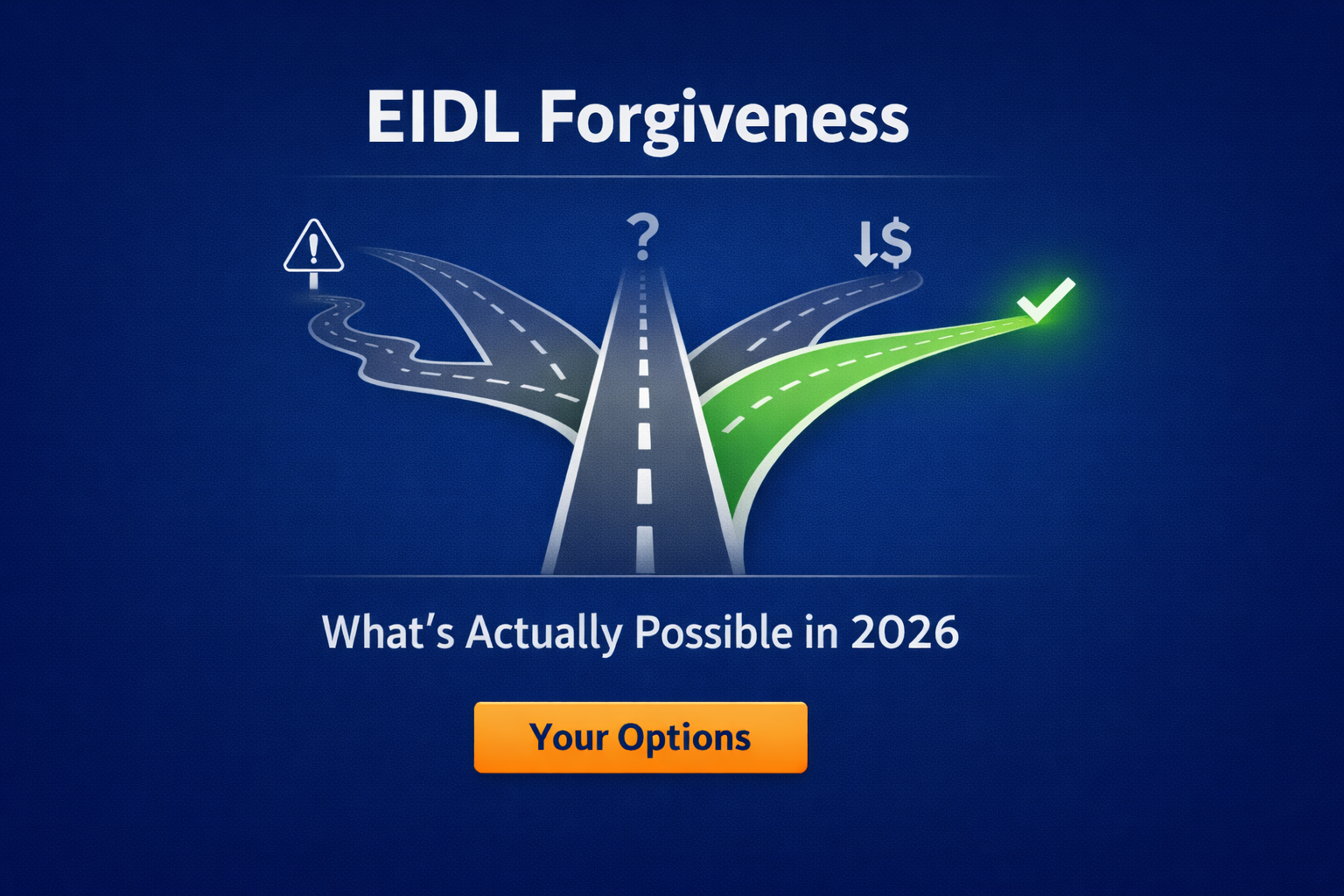
EIDL Forgiveness: Get Clarity on What’s Actually Possible in 2026

EIDL forgiveness is one of the most misunderstood topics in small business finance. The truth is simple: COVID EIDL loans are not forgivable (straight from SBA guidelines), but that does not mean you are out of options. In this guide, we break down what is actually possible in 2026, including real relief strategies, a structured decision making framework, and the steps you can take to resolve your situation.

Many borrowers enter this process expecting some form of cancellation or government relief similar to the Paycheck Protection Program (PPP). That expectation often leads to delays, poor decisions, and unnecessary financial pressure. The reality is different, but it is not without solutions.

Technically, a COVID EIDL was part of the broader SBA Economic Injury Disaster Loan (EIDL) program, but this article focuses specifically on COVID-era EIDL loans because most borrowers searching for forgiveness are dealing with a COVID, not traditional EIDL.  

If you want broader context before diving in, read The Current State of EIDL Loans.

Understanding early that you do have options, but that forgiving your business's EIDL debt is not one of them, can help you avoid costly mistakes and choose the right path forward.

Are COVID EIDL Loans Forgivable?

No, they are not forgivable.  According to SBA guidelines, COVID EIDL loans are business loans that must be repaid and are not eligible for forgiveness programs. That said, borrowers may still have legitimate options to manage or resolve the debt depending on their situation. 

The most important takeaway in this guide: no amount of hardship letters or phone calls will result in COVID EIDL forgiveness — it does not exist — so stop chasing it and focus on the options you actually have. 

What Is EIDL Forgiveness?

It is not a formal SBA program. Instead, it is a commonly used term to describe potential ways borrowers can reduce, settle, or manage their EIDL loan obligations.

Most borrowers searching for forgiveness are actually looking for one of the following:

  • A way to reduce the total balance owed
  • A way to settle the debt for less than the full amount
  • A way to lower monthly payments
  • A way to exit the loan entirely

Part of the confusion comes from the fact that many business owners still group COVID-era relief programs together. PPP and EIDL were not the same type of program, and they did not work the same way.

PPP was a COVID-era program with a built-in forgiveness process. EIDL was not. EIDLs have existed since the 1950s and have always been structured as long-term, low-interest working capital loans that businesses are expected to repay. 

Understanding that distinction is critical, because it shifts the focus away from searching for a forgiveness program that does not exist and toward evaluating the real resolution paths that may be available.

Why Forgiveness Does Not Exist For COVID EIDL

It does not exist because COVID EIDLs were issued as direct loans that borrowers are expected to repay, not as a program with a built-in forgiveness process.

While the terms were more favorable than many traditional loans, including long repayment periods and low interest rates, the debt still remains a legal obligation.

In simple terms:

  • EIDL funds were issued as loans, not grants
  • The program does not include a forgiveness mechanism
  • Payment relief or restructure may exist in limited forms, but forgiveness does not

What the SBA Actually Says About EIDLs & Forgiveness

The SBA’s position is clear. EIDL loans must be repaid according to the agreed terms.

This is where many borrowers get off track. Online discussions often use the word “forgiveness” loosely, which can make it sound like there is a formal program or hidden path that does not actually exist.

There is not.

For COVID EIDL borrowers, the starting point is understanding that forgiveness is not available. Once that is clear, the focus can shift to evaluating the real options that may apply based on the loan size, business status, and personal liability.

SBA Offer in Compromise page stating that: COVID EIDLs are not able to be forgiven

Is EIDL Forgiveness Coming in 2026?

There is currently no evidence to support the idea that forgiveness will be introduced in 2026 or in years to come.

  • No proposed legislation
  • No indication from the SBA
  • No policy roadmap suggesting cancellation

Despite ongoing rumors, there is no credible indication that forgiveness will become available. Waiting for a program that may never exist can reduce your available options over time.

Myths vs Reality


Myth Reality
EIDL loans will eventually be forgiven Congress is pushing for faster collection.
There is a hidden SBA program No such program exists. 
        My loan slipped through the cracks         It didn't. The SBA was behind. They're catching up.
        I can wait and see what happens         Treasury must attempt collection. Bad goes to worse.
        Hardship plans solve the problem         Temporary and debt balance increases.


Why Most Borrowers Make the Wrong Decision

The biggest mistakes are usually related to timing and strategy.

Many borrowers:

  • Wait too long before taking action
  • Choose short-term relief without a long-term plan
  • Ignore communication from the SBA or Treasury
  • Do not understand whether they have a personal guarantee

These decisions can reduce your options and make resolution more difficult later.

Each situation is different, but the breakdown below reflects the most common EIDL scenarios borrowers face.

Your Best Path Forward (EIDL Decision Tree)

Your best option depends on your loan size, business status, and personal liability. Understanding where you stand is the first step toward making the right decision.

If Your Loan Is Under $15,000

For smaller balances, resolving the loan directly with the SBA early can prevent escalation to Treasury collections. In most cases, finding a way to pay it off is the most practical approach.

If You Owe Between $15,000 to $200,000

Loans in this range are often tied to an EIN rather than a personal Social Security number. Depending on how the loan was structured, you may not have a personal guarantee.  

Assuming the business cannot afford to pay off the loan and operations have or will be ceasing, an orderly wind-down, liquidation, and properly structured closure package can allow the owner to walk away — leaving the unguaranteed debt with the business, not with you. The key is precision: every compliance requirement must be met for this path to work. 

If Your Loan Is Over $200,000

Loans above $200,000 typically involve a personal guarantee, which significantly increases business and personal risk.

At this level, it is important to evaluate all options carefully. Assuming the business needs or is closed, a structured wind-down is still an option, but resolving the guarantee may calls for evaluating a business or personal bankruptcy as a strategic tool. 

If Your Business Is Closed

If your business has closed, it is important to confirm that it was properly closed and liquidated. The SBA holds a blanket UCC lien on your business assets, and the Treasury takes the sale or disposition of those assets seriously. If assets were sold or transferred without addressing the lien, that's a problem.  

 A proactive review of how the closure was handled is the best first step.  

If Your Business Is Still Operating

If your business is still active, you have more flexibility but also more decisions to make.

You may be able to restructure and keep operating, or close and start fresh.   

The key is understanding the full picture before making major moves — acting without clarity can turn manageable options into costly mistakes. 


EIDL-Decision-Matrix

Full Breakdown of Your Relief Options

Hardship Accommodation Plan

Hardship plans allow borrowers to temporarily reduce their monthly payments.

While helpful in the short term, they come with limitations:

  • The total balance is not reduced
  • Interest continues to accrue
  • The solution is temporary

These plans can provide breathing room, but they are not a long-term solution.

Bankruptcy

Bankruptcy, whether business or personal, is often misunderstood. It can be a legitimate strategic option depending on your goals, circumstances and overall financial situation.

It may:

  • Eliminate or restructure debt
  • Provide legal protection from collection
  • Offer a fresh start

However, bankruptcy is a tool for resolving debt. It does not officially close your business, and it does not protect you from allegations of financial mismanagement. The right approach and time for using it depends on loan size, personal guarantee exposure, and your overall financial picture. 

Resolution: What the Process Actually Looks Like

Borrowing the EIDL was the easy part. Getting out from under it is the hard part.

Resolving an EIDL is a six-month paperwork gauntlet — part marathon, part obstacle course, with no shortcuts. It involves:

  • Detailed documentation
  • Ongoing communication with the SBA or Treasury
  • Strict compliance with federal closure and liquidation requirements

The end goal: confirmation that your business's EIDL, the unforgivable federal debt, is fully resolved and not personally shackled to you.

The more complex the situation, the more important it is to get clarity early and avoid costly mistakes.

Actionable Steps (What to Do Next)

If you are unsure where to begin, follow these steps:

  1. Review your loan agreement and details
  2. Determine whether a personal guarantee applies
  3. Gather all relevant documentation
  4. Identify whether your loan is with the SBA or Treasury
  5. Evaluate your options before taking action
  6. Talk to an expert to help guide you

A structured approach can help you avoid unnecessary mistakes.

Q&A

Are EIDL loans forgivable?

No, EIDL loans are not forgivable and must be repaid.

Will EIDL loans be forgiven in the future?

There is no indication that forgiveness will be introduced.

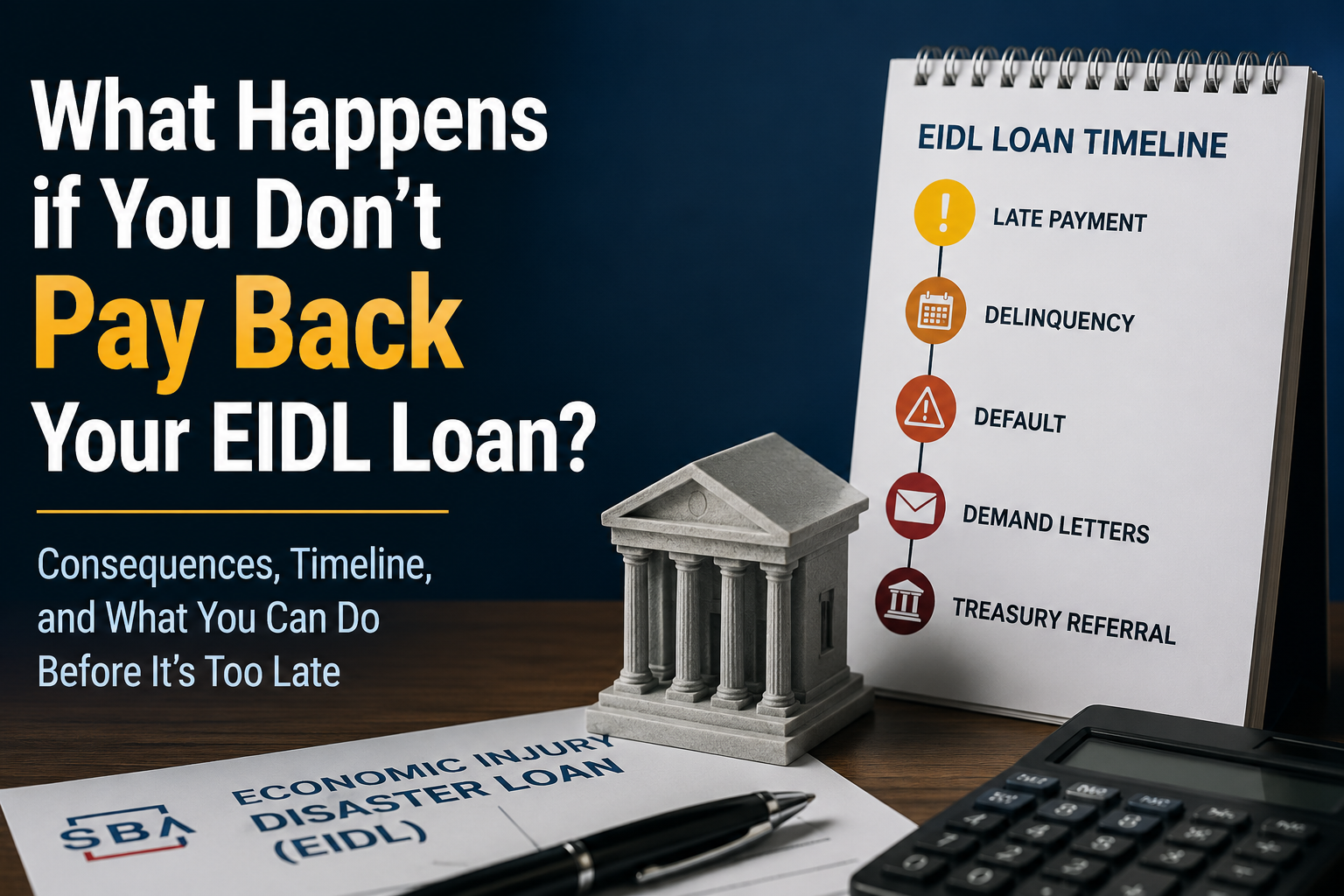
What happens if I do not pay my EIDL loan?

The loan will be transferred to Treasury for collections, which can lead to added fees, tax refund offsets, wage garnishment, bank account seizure, and other aggressive measures, including, private collection agencies pursuing court judgments against the borrower. 

Bottom Line

EIDL forgiveness is one of the most misunderstood topics in small business lending.

The reality is clear:

  • EIDL loans are not forgivable
  • Real solutions do exist

The key is understanding your situation early and choosing the right strategy based on your circumstances.

If you want clarity on your specific situation, start here to explore your options. No one resolves more EIDL loans than EiDLexit. 

COVID EIDL Forgiveness (2026 Guide): Truth, Myths & Real Loan Relief Options

COVID EIDL Forgiveness (2026 Guide): Truth, Myths & Real Loan Relief Options

EIDL Forgiveness: Get Clarity on What’s Actually Possible in 2026 EIDL forgiveness is one of the most misunderstood topics in small business finance....

Read More
The Inspector General Report Will Have Major Implications For EIDLs in 2026 | The State of EIDLs

The Inspector General Report Will Have Major Implications For EIDLs in 2026 | The State of EIDLs

What You Need To Know The Inspector General report is reshaping the EIDL environment heading into 2026, with implications that extend beyond the...

Read More
SBA Ends EIDL Hardship Plan: What Borrowers Need to Know

SBA Ends EIDL Hardship Plan: What Borrowers Need to Know

If you’ve been relying on the SBA’s Hardship Accommodation Plan (HAP) for COVID-19 EIDL to reduce your EIDL payments, there’s some big news: the...

Read More