3 min read

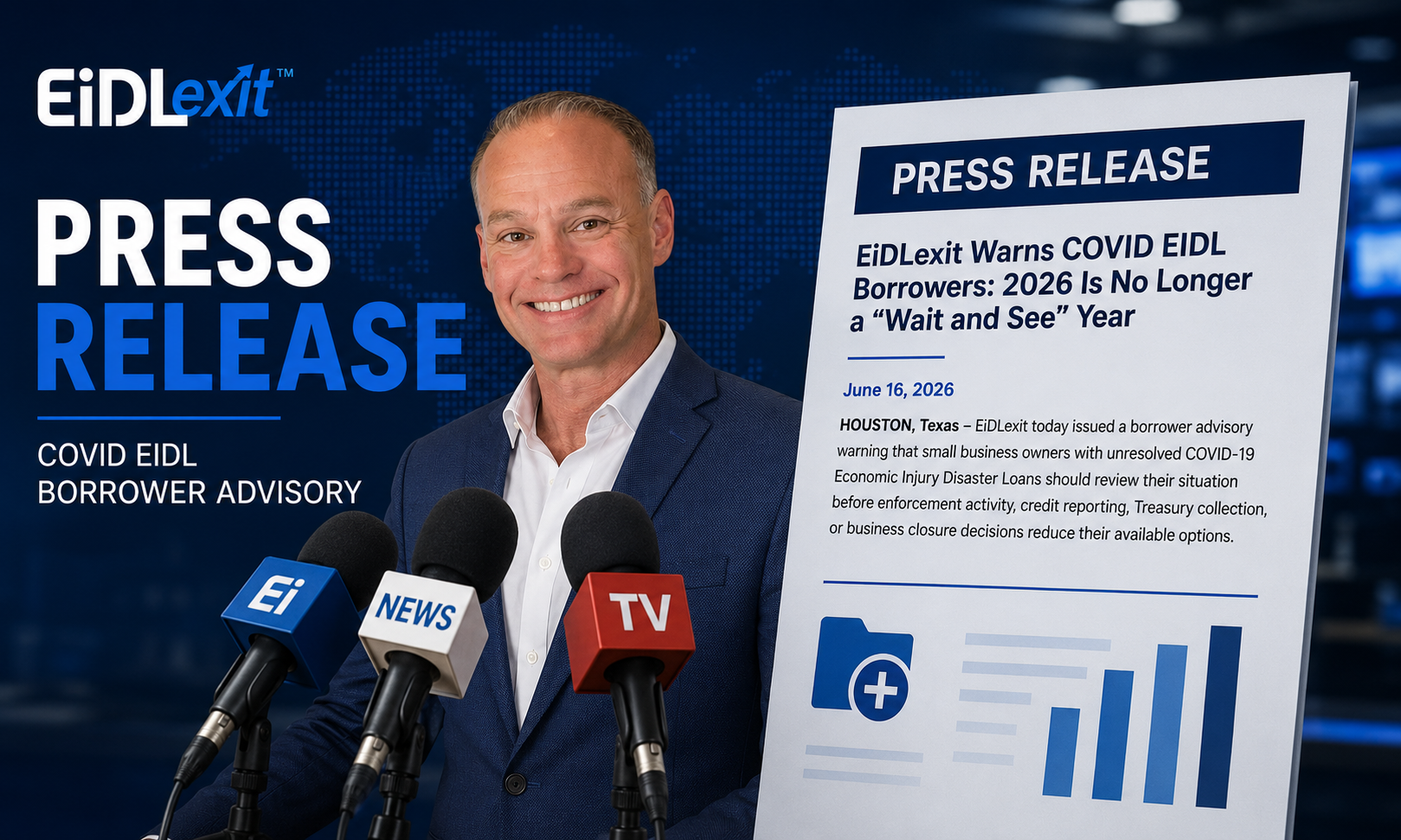
NEWS RELEASE - EiDLexit Warns COVID EIDL Borrowers: 2026 Is No Longer a “Wait and See” Year

NEWS RELEASE - EiDLexit Warns COVID EIDL Borrowers: 2026 Is No Longer a “Wait and See” Year
NEWS RELEASE - EiDLexit Warns COVID EIDL Borrowers: 2026 Is No Longer a “Wait and See” Year
6:21

NEWS RELEASE
EiDLexit
FOR IMMEDIATE RELEASE
June 23, 2026

SBA oversight, Treasury referrals, and credit reporting concerns are increasing pressure on unresolved EIDL borrowers.

HOUSTON, Texas - EiDLexit today issued a borrower advisory warning that small business owners with unresolved COVID-19 Economic Injury Disaster Loans should review their situation before enforcement activity, credit reporting, Treasury collection, or business closure decisions reduce their available options.

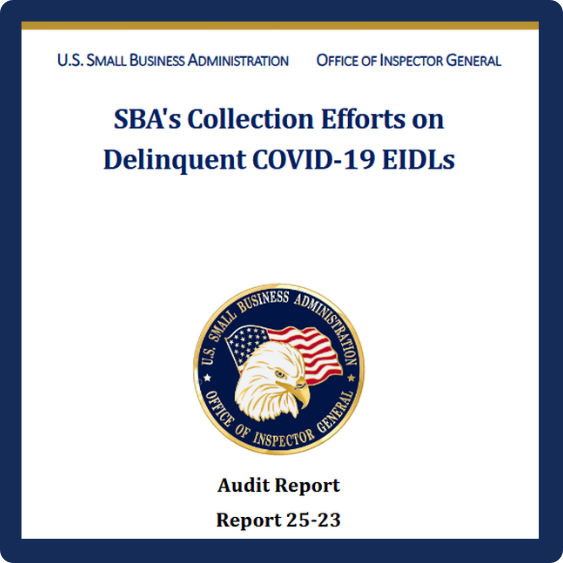
The advisory follows increased federal scrutiny of delinquent COVID EIDL loans. In SBA Office of Inspector General Report 25-23, the OIG found that the SBA did not consistently use several collection tools, including credit bureau reporting, post-default site visits, security interest procedures, and litigation referrals. SBA agreed with OIG Recommendation 2 on timely credit bureau reporting for delinquent COVID-19 EIDL obligors and set a June 30, 2026, Final Action Target Date to add tracking functionality for those submissions.

EiDLexit says the report signals an important shift for borrowers: unresolved EIDL loans are not being ignored, and the government is moving toward more formal, trackable, and coordinated collection activity.

“Many borrowers are still treating their EIDL like a pandemic-era relief program that can sit unresolved indefinitely,” said EJ Simonsen, founder of EiDLexit. “That is a dangerous assumption in 2026. The SBA, Treasury, and federal oversight bodies are clearly moving toward more structured enforcement. Borrowers with complex situations need to understand their position before the process starts controlling the outcome.”

According to the U.S. Treasury Bureau of the Fiscal Service, SBA began referring delinquent COVID EIDL debts to Treasury’s Cross-Servicing program in September 2025. Treasury also states that once COVID EIDL debts are referred, they cannot be returned to the SBA.

“There is a big difference between being behind and being out of runway,” Simonsen said. “A borrower who acts early may still have communication, documentation, and planning options available. A borrower who waits until Treasury escalation, credit damage, or asset questions arise, may face a much more rigid process.”

The warning also comes as SBA has publicly announced major pandemic-era loan collection activity. In April 2026, the agency announced it had referred 562,000 suspected fraudulent PPP and COVID EIDL loans totaling $22.2 billion to Treasury for collection and transmitted borrower information to the Department of Justice.

EiDLexit emphasizes that ordinary distressed borrowers should not confuse their situation with suspected fraud cases, but says the announcement reflects a broader federal shift toward collection, accountability, and interagency coordination.

EiDLexit says complex EIDL cases often involve more than a missed payment. Borrowers may need to evaluate business status, pledged collateral, personal guarantee exposure, business closure steps, liquidation requirements, tax obligations, other debts, credit impact, and whether the business is still viable.

While some borrowers may be able to address routine SBA servicing issues on their own, EiDLexit says more complex cases often require broader financial and strategic review before decisions are made.

The company identifies several higher-risk situations where borrowers should get clarity before making decisions:

• The business has closed or is preparing to close while still holding SBA-collateralized assets
• The loan may involve a personal guarantee
• The account is delinquent, charged off, or referred to Treasury
• The borrower has received a demand letter or private collection notice
• The owner is personally funding a struggling business
• There are multiple SBA loans, related entities, lawsuits, judgments, or unsecured debts
• Bankruptcy timing or business dissolution is being considered
• The borrower is trying to preserve future credit or financing options

“One of the biggest mistakes we see is borrowers assuming every EIDL situation should be handled the same way,” Simonsen said. “That is not true. A borrower who is still operating, current, and temporarily cash-constrained is in a very different position than a closed business with collateral, personal liability concerns, and Treasury exposure.”

EiDLexit says the practical takeaway is simple: before contacting SBA, closing a business, liquidating assets, stopping payments, entering bankruptcy discussions, or ignoring collection notices, borrowers should first understand the likely consequences of each step.

“This is not a message to create panic,” Simonsen said. “It is a message to encourage business owners to stop guessing. They should understand whether they are dealing with a temporary payment problem, a closure issue, a collateral issue, a personal guarantee issue, or a Treasury collection issue. Those are very different conversations.”

For additional borrower context, EiDLexit has published a deeper breakdown of the SBA Inspector General report and what it may mean for EIDL borrowers in 2026 at https://eidlexit.com/blog/the-state-of-eidls-01.

About EiDLexit

EiDLexit provides strategic guidance and support for business owners navigating complex SBA EIDL situations, including hardship planning, compliance concerns, business closures, Treasury-related issues, and structured resolution strategies. The company helps borrowers evaluate risk factors, understand available pathways, and prepare for informed communication with the SBA and related agencies.

For more information, visit https://eidlexit.com.

Disclaimer: EiDLexit is not a law firm and does not provide legal advice. Borrowers with legal, bankruptcy, tax, or litigation concerns should consult the appropriate licensed professional.

###

Media Contact:
Jesse Schwarz
Media Liaison, EiDLexit
(832) 819-2356
media@eidlexit.com

COVID EIDL Forgiveness (2026 Guide): Truth, Myths & Real Loan Relief Options

COVID EIDL Forgiveness (2026 Guide): Truth, Myths & Real Loan Relief Options

EIDL Forgiveness: Get Clarity on What’s Actually Possible in 2026 EIDL forgiveness is one of the most misunderstood topics in small business finance....

Read More
The Inspector General Report Will Have Major Implications For EIDLs in 2026 | The State of EIDLs

The Inspector General Report Will Have Major Implications For EIDLs in 2026 | The State of EIDLs

What You Need To Know The Inspector General report is reshaping the EIDL environment heading into 2026, with implications that extend beyond the...

Read More