
3 min read

GAO Report Raises Questions About SBA EIDL Collections and Oversight

GAO Report Raises Questions About SBA EIDL Collections and Oversight

Approximately $124.6 billion in delinquent COVID EIDL debt referrals had been made to Treasury’s collection programs, with $346 million collected as of February 6, 2026, according to EiDLexit’s calculation using figures published by the U.S. Government Accountability Office (GAO) - GAO-27-107701. 3  These totals combine COVID EIDL referrals and collections reported separately for the Treasury Offset Program and Cross-Servicing. 1 These figures describe reported referrals and collections through that date; they do not, by themselves, establish whether Treasury’s collection efforts were effective.

Key Takeaways

  • COVID EIDL referral amounts totaled approximately $124.6 billion, with $346 million collected as of February 6, 2026, based on EiDLexit’s calculation of GAO’s Treasury program figures.
  • GAO identified gaps in SBA’s oversight, including how it documented improper-payment estimates and evaluated recovery efforts.
  • Improper payments and delinquent loans are different issues. Neither an improper-payment finding nor missed payments alone establish fraud.
  • The report does not forgive EIDL debt or create new relief programs. Borrowers should clarify their loan status and obligations before making major business decisions.

What Is an Improper Payment?

An “improper payment” means the government loaned money it shouldn’t have, or loaned the wrong amount. In this context, it’s about how the loan was made, not whether you’ve kept up with payments.

Fraud is one cause, but not the only one. Mistakes happen, too, like a loan amount calculated incorrectly. Missing paperwork can also mean the agency cannot determine whether a payment was proper.

An improper-payment finding does not, by itself, mean the borrower committed fraud. If you’re unsure where your loan stands, clarify its status and any outstanding documentation requests before making decisions about closing your business. 2

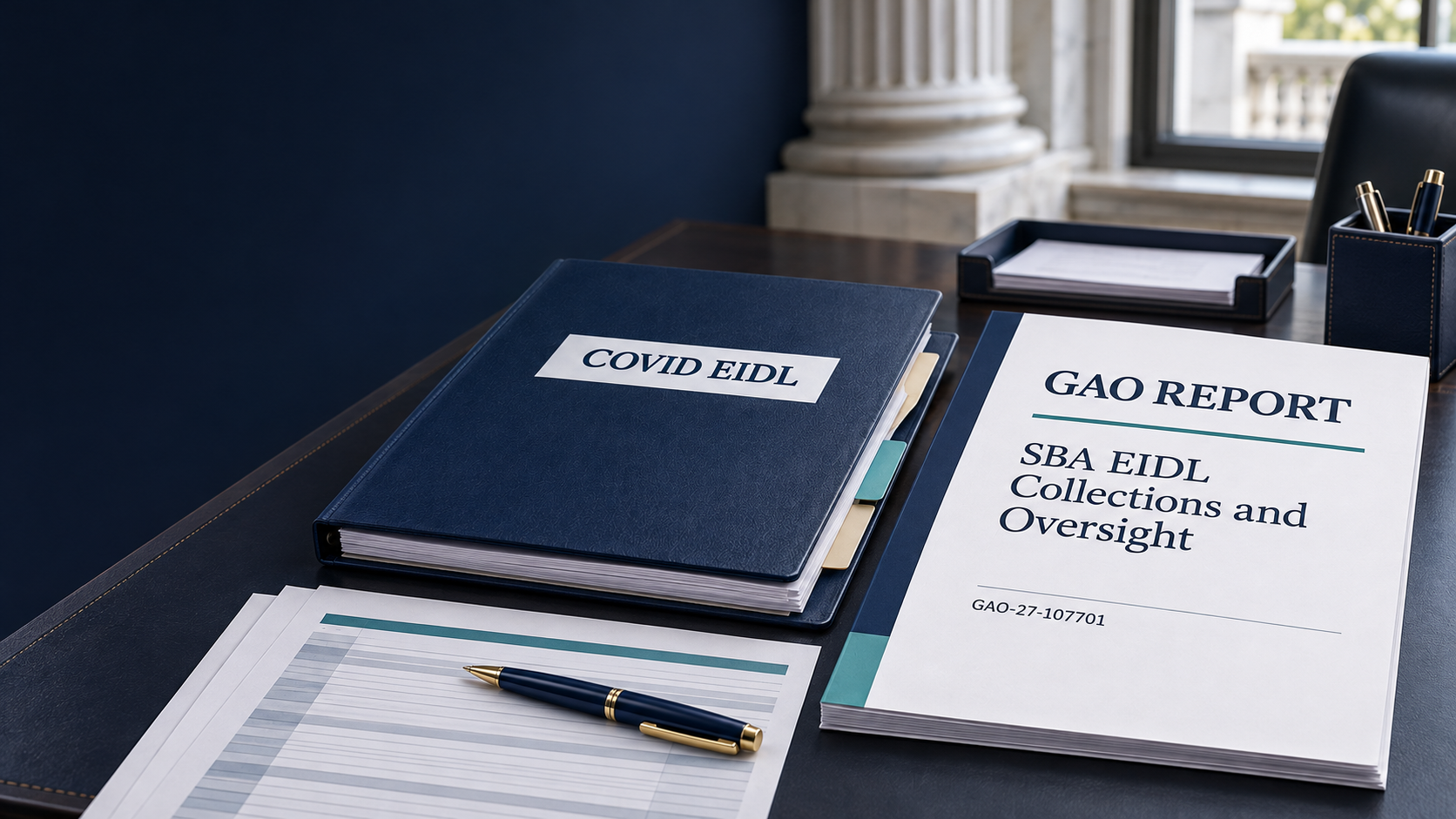
The report, Opportunities Exist to Improve Improper Payment Estimation and Recovery Processes (GAO-27-107701), was requested by Senator Joni Ernst, Chair of the Senate Small Business Committee, and publicly released on November 9, 2026. GAO made four recommendations to help SBA improve how it estimates improper payments and recovers funds.  SBA disagreed with the first two recommendations and agreed or partially agreed with the others. GAO maintained that all four recommendations were warranted. For COVID EIDL borrowers, its collection data also provide a clearer picture of the volume of debt referred to Treasury. 3

GAO reviewed COVID EIDL and standard EIDL separately. COVID EIDL provided pandemic-related assistance, while standard EIDL helps eligible businesses meet financial obligations following other declared disasters. The Treasury collection figures cited here relate specifically to COVID EIDL loans. 3

Billions Referred to Treasury for Collection

According to GAO, approximately $135.4 billion in delinquent PPP and COVID-19 EIDL debt had been referred to the U.S. Treasury for collection as of February 6, 2026. As a result of those referrals, approximately $445 million has been collected as of that date.

GAO’s combined figures include PPP debt, but COVID EIDL accounts for most of the reported referral amounts. Unlike PPP, COVID EIDL had no comparable loan-forgiveness program. However, falling behind on EIDL payments does not, by itself, indicate fraud. 4, 5

These findings highlight the scale and complexity of federal pandemic-loan collections.

For borrowers facing collection activity, understanding what to verify in an EIDL collection notice is an important first step toward identifying potential documentation issues and understanding their options.

Financial Hardship Is Not Fraud

It's important to note a business that cannot repay its EIDL loan is not necessarily a business that committed fraud.

GAO identified shortcomings in how SBA documented its improper-payment estimation decisions and accounted for known fraud risks. Those findings reinforce the importance of accurate records, reliable classifications, and responsible oversight.

For legitimate small-business borrowers facing financial hardship, these distinctions matter.

What This Means for EIDL Borrowers

The GAO report does not eliminate repayment obligations or establish new borrower relief programs. It does, however, underscore the importance of documentation, transparency, and effective administration of federal loan collections.

Borrowers dealing with EIDL repayment difficulties should understand their loan status, preserve financial records, and evaluate available options before collection problems escalate.

Business owners should also understand what happens when an EIDL loan goes unpaid, particularly when Treasury referral, collateral, or personal liability may be involved.

For those struggling to make payments, understanding EIDL hardship and repayment options can help distinguish temporary financial difficulties from more complex situations requiring a broader resolution strategy.

Frequently Asked Questions

Does the GAO report forgive EIDL debt?

No. The report reviews SBA’s oversight and recovery practices. It does not forgive EIDL debt, change loan agreements, or create a new borrower relief program.

What is an improper payment?

An improper payment is money the government should not have paid or paid in the wrong amount. Missing documentation can also prevent an agency from determining whether a payment was proper. It does not necessarily mean fraud, and falling behind on loan payments does not, by itself, make the original loan improper.

Is COVID EIDL the same as disaster EIDL?

COVID EIDL was a pandemic-specific version of SBA’s Economic Injury Disaster Loan program. Standard EIDL provides assistance to eligible businesses suffering economic injury from other declared disasters. GAO reviewed the two separately, and the Treasury collection figures discussed in this article refer specifically to COVID EIDL.

At EIDLexit, we believe borrowers deserve clear information about their obligations and a realistic understanding of the challenges they face. We work with legitimate small business owners who borrowed in good faith and can no longer repay. We will not knowingly assist anyone seeking to deceive the government or avoid lawful obligations.

Questions about your EIDL status? Schedule a consultation. 

Sources:

1.   U.S. Government Accountability Office — GAO report, Appendix II, Table 4, page 45 

2.  U.S. Government Accountability Office - GAO-27-107701 Public Release Announcement November 9

3.  U.S. Government Accountability Office, GAO-27-107701, October 7, 2026

4.   EIDL’s share of referrals — GAO report, Table 4, page 45 

5.  Forgiveness distinction — GAO report, program descriptions, pages 6–7 

GAO Report Raises Questions About SBA EIDL Collections and Oversight

GAO Report Raises Questions About SBA EIDL Collections and Oversight

Approximately $124.6 billion in delinquent COVID EIDL debt referrals had been made to Treasury’s collection programs, with $346 million collected as...
Read More
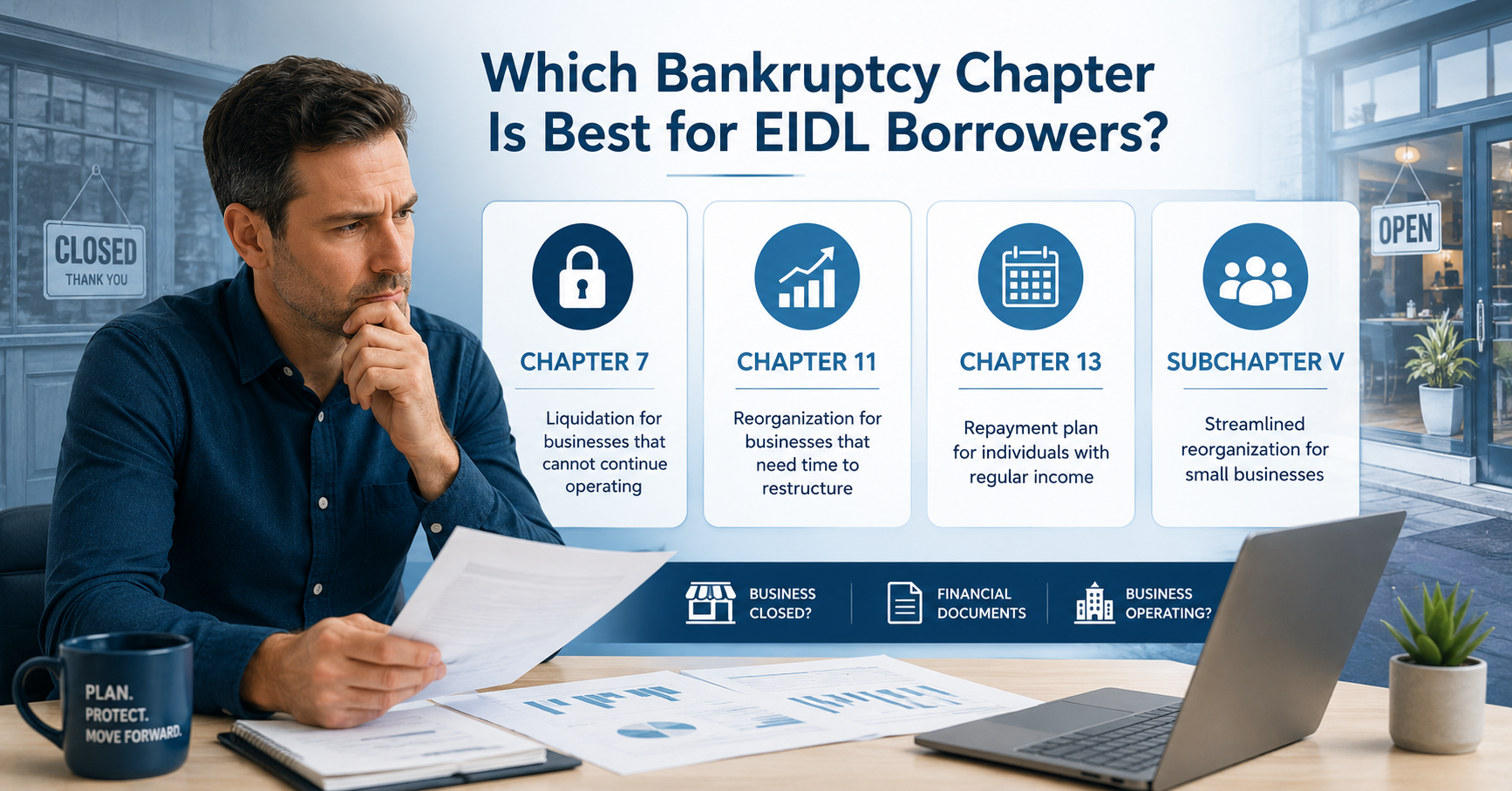
Chapter 7, 11, or 13: What EIDL Borrowers Should Know Before Considering Bankruptcy

Chapter 7, 11, or 13: What EIDL Borrowers Should Know Before Considering Bankruptcy

For business owners struggling with COVID EIDL debt, bankruptcy can start to look like the only way out. But filing isn't always the first step, and...

Read More
News Release: SBA to the Rescue? EiDLexit Cautions Business Owners to Understand Their Current Obligations Before Signing Up for Additional Loans

News Release: SBA to the Rescue? EiDLexit Cautions Business Owners to Understand Their Current Obligations Before Signing Up for Additional Loans

HOUSTON, Nov. 18, 2026 -- EiDLexit, which advises business owners struggling with EIDL repayment, cautions owners impacted by weather events and...

Read More